When she first got married, Lillian lived close to her mother’s home. It must have been a hard decision to move to another town and not be able to walk over to her mother’s house.
Lillian and Paul probably moved from Paterson, NJ, to Hackensack, NJ, around 1940 to be closer to their store, Lillian Dress Shop, which they had opened at 111 Main Street in Hackensack. In the 1940 Federal Census, they were still living in Paterson. However, when Paul filed his draft card in 1941, they lived in Hackensack.
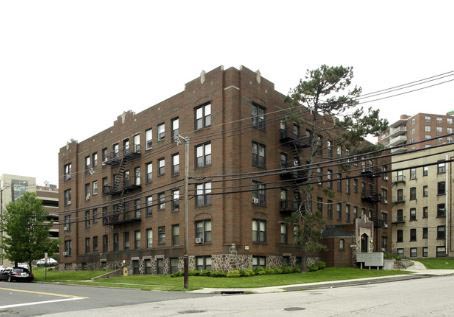
They had moved to 265 Beech Street in Hackensack. Their apartment was on the second floor with windows looking out over the backyard of the building. They had to carry everything up and down the stairs as there were no elevators.
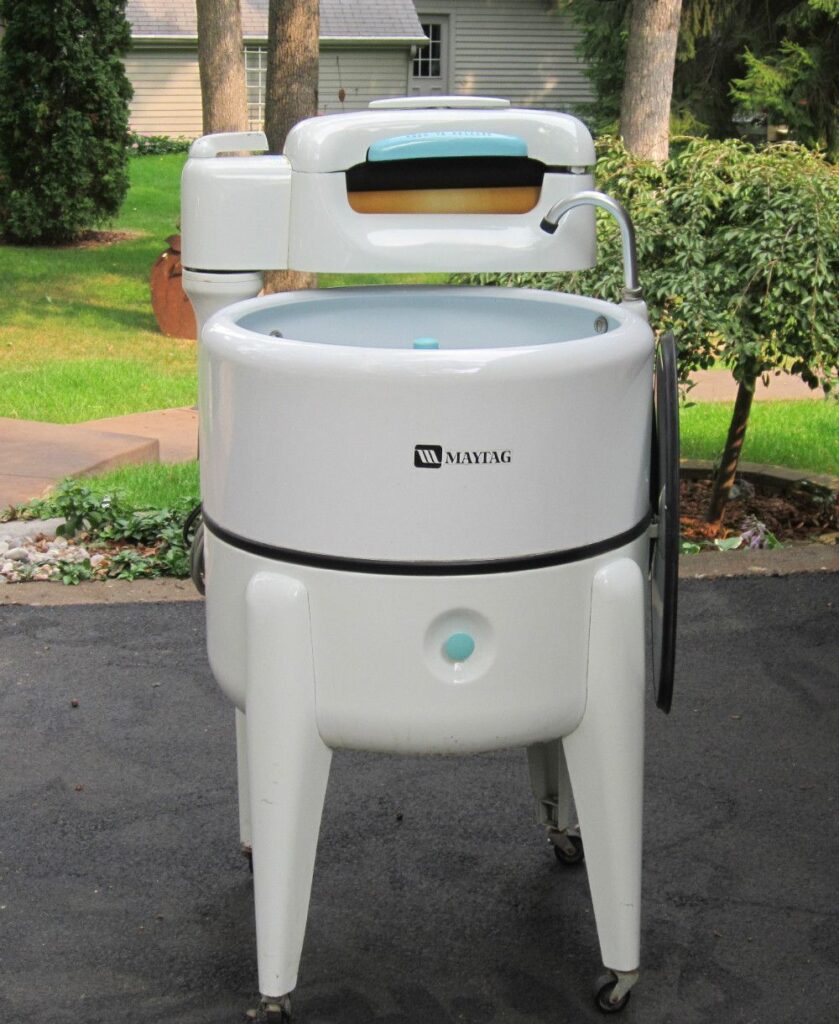
This included their laundry as the shared building washing machine was in the basement. Washing machines were not automatic as they are today. They were called wringer washers because you had to hand-feed each piece of laundry through the wringer to get the water out.
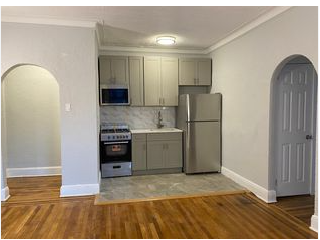
The building was built in 1935, so it was still relatively new when Lillian and Paul moved in. Their apartment consisted of a small entry alcove, a tiny kitchen with almost no counter space, a living area with room for a kitchen table, a bedroom, and a bathroom. Lillian continued to live there after her husband, Paul, died, raising her son, Stanley, in that apartment.
This picture gives you an idea of the layout of the apartment, although this picture shows an updated 2023 version of one.
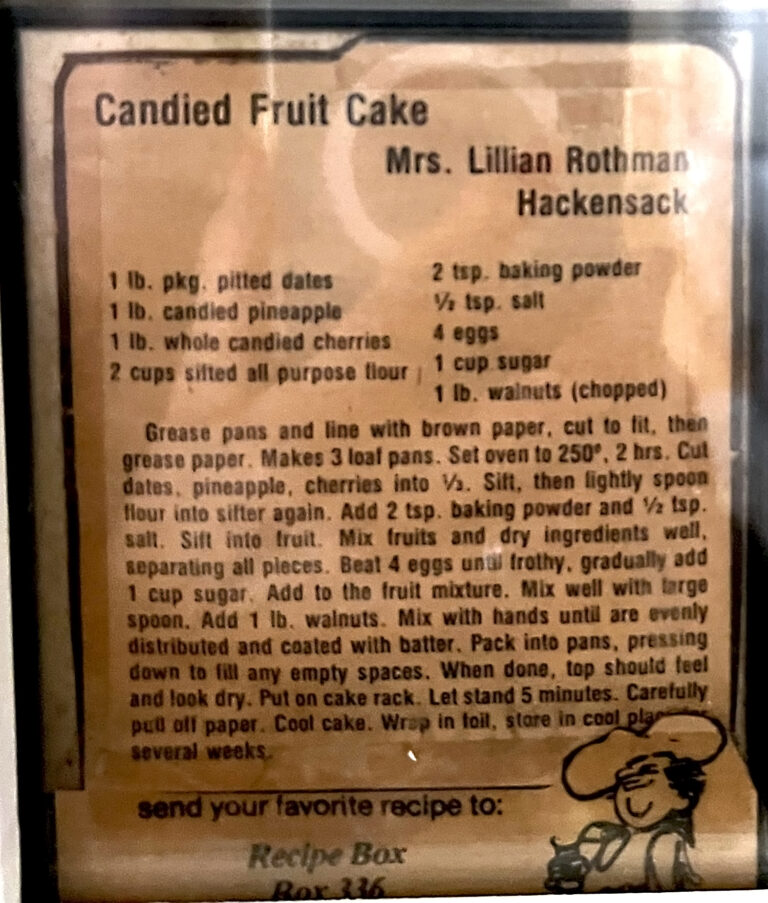
The small kitchen did not stop Lillian from cooking and baking. She loved cooking for her friends and family, and during the holiday time, she always made candied fruitcakes. One year it actually won an award!
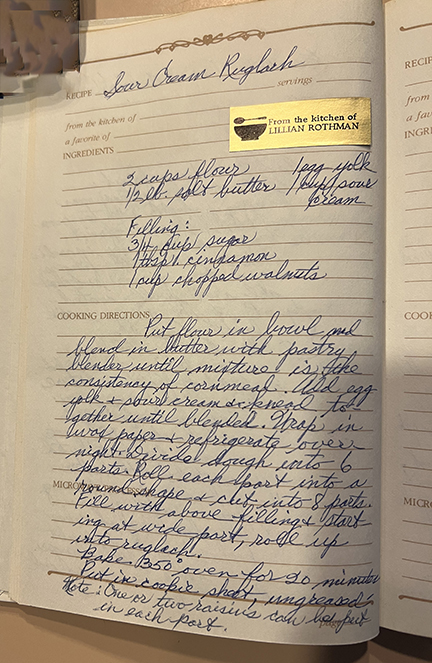
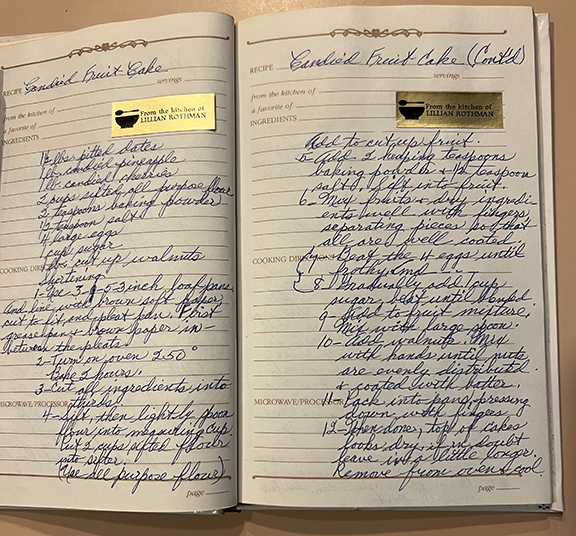
Here is the recipe in her own hand-writing. She wrote it out for me to have.
She would clean off the kitchen table and use that as a work surface for her food preparation.
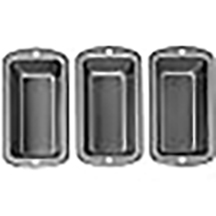
She would bake the little cakes in small rectangular baking pans, wrap them up, and deliver them to her friends and family.

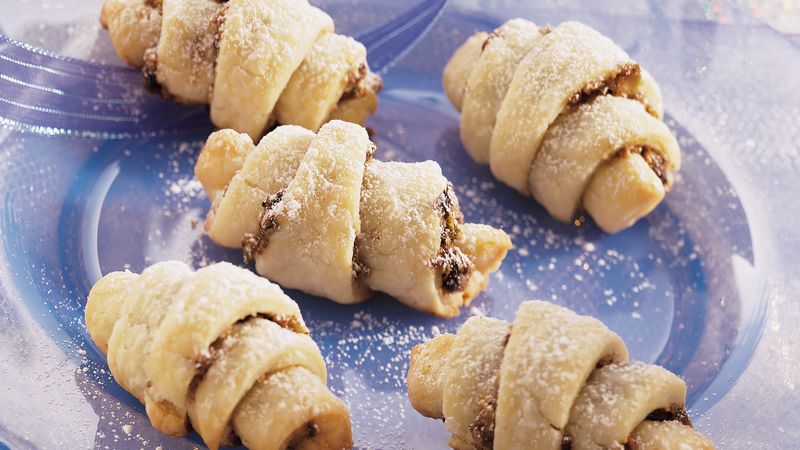
Once she moved to Connecticut, she stopped making fruitcakes, but she started a new tradition and became known as “The Rugelach Lady”.
Everywhere she went, she would make a big tray of rugelach to bring along. Everyone looked forward to the delicious, little pastries and they would get gobbled up as soon as she put the tray down.
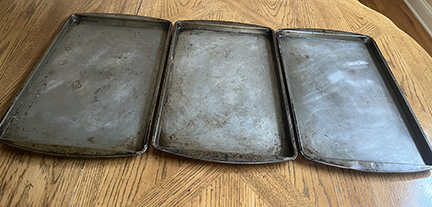
Lillian’s baking pans now reside with my friend, Dorie Cobern. She says that whenever she uses them, they remind her of Lillian and her trays of rugelach.